
How to Use Claude for SEO (2026 Guide)
Learn how to use Claude AI for SEO in 2026 — from keyword research and content audits to AEO, GEO, schema generation, and getting cited in AI-generated answers. Free audit at aeo.aitoolefy.com.
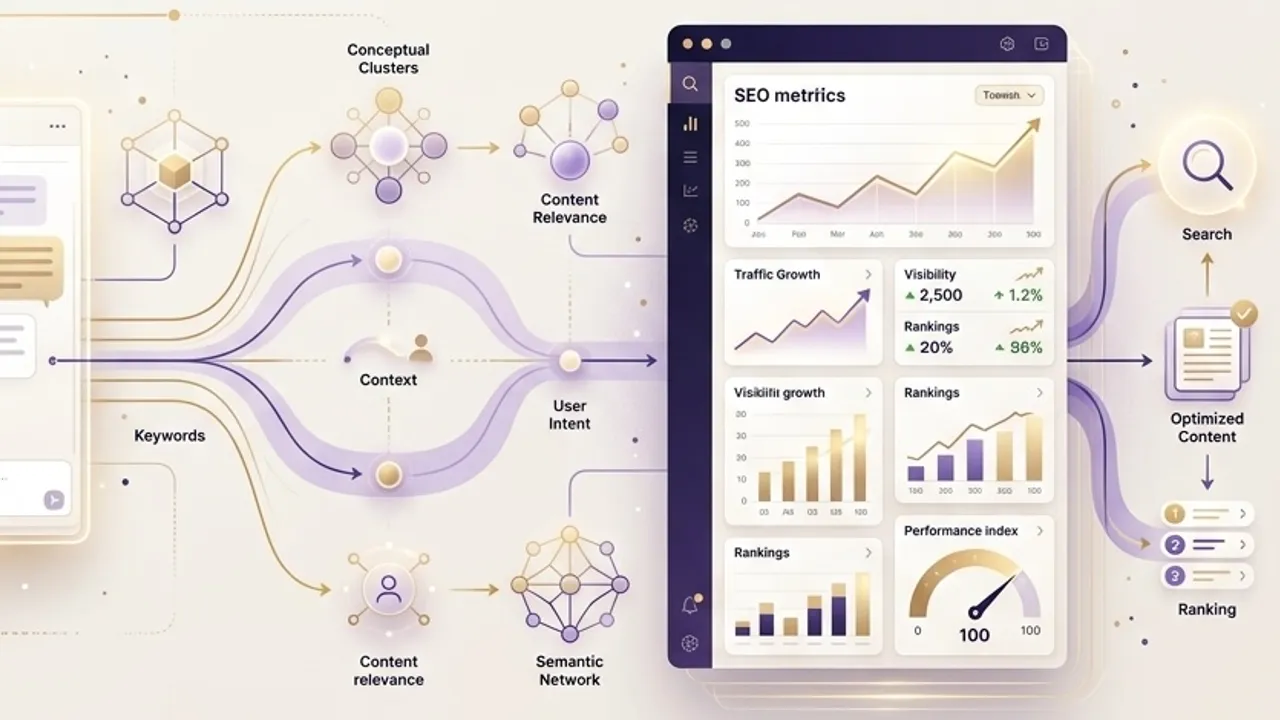
Claude AI — built by Anthropic — has quickly become one of the most capable tools in an SEO professional's arsenal. While most marketers still reach for ChatGPT first, SEO specialists who have tested both know something the majority haven't caught up to yet: Claude produces more nuanced, structured, and analytically rigorous SEO output than any other AI model available in 2026.
But there are two ways to think about Claude and SEO — and most guides only cover one of them. The first is using Claude as a productivity tool to do SEO work faster and smarter. The second — and increasingly critical in 2026 — is optimizing your website so that Claude cites it in its AI-generated answers, making you visible to millions of users who ask Claude questions in your niche every day.
This guide covers both completely. By the end, you will have a full playbook: the exact prompts, workflows, and optimization strategies to use Claude for every stage of your SEO process — and the technical steps to make sure Claude recommends and cites your website when users ask about your topic.
⚡ Before You Start: Know your baseline first. Run a free audit at aeo.aitoolefy.com — AeoAudit by Aitoolefy gives you an instant AEO and GEO readiness score showing exactly how visible your website is to Claude, ChatGPT, Gemini, and Perplexity right now. It takes under 60 seconds and costs nothing.
🧠 Why Claude Is Different for SEO in 2026
Claude is not just another AI chatbot. It is purpose-built by Anthropic with a stronger emphasis on accuracy, nuanced reasoning, and structured output — qualities that make it exceptionally well-suited for SEO work. Here is what sets Claude apart from other AI tools in an SEO context:
- Longer context window — Claude can process entire websites, articles, and competitor content in a single prompt, enabling deep comparative analysis impossible with other tools.
- Superior structured output — Claude consistently produces cleaner tables, schemas, and formatted content than alternatives — critical for technical SEO tasks like JSON-LD generation.
- More conservative and accurate — Claude is less likely to hallucinate statistics or fabricate sources, making its research outputs more reliable for SEO content that requires factual accuracy.
- Stronger analytical reasoning — For complex tasks like content gap analysis, competitor strategy breakdowns, and E-E-A-T evaluation, Claude's reasoning depth is unmatched.
- Growing as a search surface — Claude is increasingly used as a research tool by professionals, researchers, and decision-makers — making citation by Claude increasingly valuable for brand visibility.
In 2026, AI-generated answers account for 40%+ of all informational search responses globally. Claude's share of that is growing fast — and brands that optimize for Claude citation today are building a compounding visibility advantage over competitors who aren't.
Not sure if Claude can currently find your website? Run a free AEO Audit on AeoAudit and get your AI visibility score across Claude, ChatGPT, Gemini, and Perplexity simultaneously.
🔍 Claude for Keyword Research
Keyword research with Claude goes far beyond a simple list of terms. Claude's analytical depth allows you to build comprehensive keyword strategies that account for search intent, conversational AEO queries, topical authority clusters, and competitive gaps — all in a single workflow.
Core Keyword Cluster Generation
Start with this foundational prompt to build your keyword universe:
"Act as a senior SEO strategist. For the topic [your topic], generate a comprehensive keyword cluster including: (1) 10 head terms with high search volume, (2) 20 long-tail variations grouped by intent — informational, commercial, navigational, and transactional, (3) 10 question-based keywords that match how users ask AI assistants. Format as a structured table with keyword, intent, and estimated difficulty level."
AEO Conversational Keyword Research
For AEO optimization — getting cited in Claude's answers — you need to target the exact conversational questions users type into Claude, Perplexity, and ChatGPT. These differ from Google keywords. Use this prompt:
"What are the 20 most common questions users ask Claude AI about [your topic]? Write them exactly as a user would phrase them in a conversational AI interface. Group them by subtopic. These will become my H2 headings for AEO content."
These question-format phrases become your H2 headings. When your content directly and concisely answers the questions people ask Claude, Claude is far more likely to extract and cite your page as a source.
Semantic Keyword Mapping
"Analyze the semantic keyword field around [primary keyword]. List 30 related entities, concepts, and terms that a truly comprehensive, authoritative article on this topic must cover. This is for building topical authority — not just targeting one keyword."
This prompt helps you build the kind of deep topical coverage that both Google's E-E-A-T system and Claude's citation algorithm reward. After generating your semantic map, run a free GEO Audit on AeoAudit to see how your current content measures up against these semantic depth requirements.
✍️ Claude for Content Creation and Optimization
Claude produces some of the most structured, well-reasoned long-form content of any AI model — but using it correctly for SEO requires the right framework. Raw AI output, even from Claude, lacks the original expertise, firsthand experience, and unique data points that AI engines and Google's Helpful Content system increasingly require in 2026.
The Claude Content Workflow for AEO
The highest-performing approach treats Claude as a content architect and polisher, not a ghostwriter. Here is the exact workflow:
- Generate the architecture — Ask Claude to build a comprehensive content outline with H2 and H3 headings, following AEO best practices (question-phrased headings, answer-first structure).
- Write your expertise sections — Fill each section with your original insights, data, examples, and opinions. This is the irreplaceable human layer that gets you cited.
- Use Claude to expand and polish — Paste your draft and ask Claude to improve clarity, close logical gaps, add supporting context, and suggest missing angles.
- AEO-ify each section — Use the prompt below to convert each section into AI-citable format.
The AEO Content Rewrite Prompt
Research from early 2026 analyzing 1.2 million verified AI citations found that 44.2% of all citations come from content in the first 30% of a page. This means your opening sections need to be optimized most aggressively. Use this prompt on each major section:
"Rewrite this section following AEO best practices: (1) Open with a direct answer to the implied question in the heading — under 50 words, (2) Follow with 3-5 factual bullet points with specific data where possible, (3) End with a concrete real-world example. The entire section should be self-contained — a reader should understand the key point without reading anything else on the page."
Content Freshness — A Critical Claude Citation Signal
Claude treats content freshness as a trust signal. In 2026, outdated pages are increasingly bypassed in favor of more current sources. An article still citing 2024 statistics in 2026 is treated as a potential "hallucination risk" by AI retrieval systems. Use this Claude prompt quarterly on your top pages:
"Review this article for outdated claims, statistics, or information that may no longer be accurate in 2026. Identify every specific data point that needs updating and suggest what to research for replacement figures. Also flag any sections where the advice may no longer reflect current best practices."
🧱 Claude for Technical SEO
Technical SEO is where Claude's structured output capabilities shine most. Tasks that previously required a developer can now be executed in minutes using Claude — and technical excellence is a prerequisite for both Google rankings and AI engine citation.
JSON-LD Schema Generation
Schema markup is critical for AEO and GEO — it is the primary way you make your content machine-readable for AI parsers. Claude generates clean, valid JSON-LD faster and more accurately than any other AI tool. Use this prompt:
"Generate complete, valid JSON-LD schema markup for a [FAQPage / Article / HowTo / Organization] for the following content: [paste your content]. Include all required and recommended properties. Format as a clean script tag ready to paste into the HTML head. Validate that all fields follow Schema.org standards."
After generating and implementing your schema, validate it instantly with a free GEO audit at aeo.aitoolefy.com/geo-audit-tool. AeoAudit by Aitoolefy automatically validates your JSON-LD quality and flags errors that hurt your AI search visibility.
Full On-Page SEO Audit with Claude
Paste your full page HTML into Claude with this audit prompt — it evaluates every on-page element against both traditional SEO and AEO citation readiness standards:
"Audit this page against both traditional SEO standards and AEO citation readiness. Score each element 1-10 and provide the specific rewrite or fix for anything under 8: (1) Meta title — length, keyword placement, click-worthiness, (2) Meta description — length, keyword, value proposition, (3) H1 — presence and keyword alignment, (4) H2 structure — answer-first openings, (5) Content structure — self-contained paragraphs, direct answers, (6) Internal links — count and anchor text, (7) Schema markup — type match, required fields, (8) FAQ section — present, answer-first, schema-ready, (9) GEO readiness — extractability for AI, (10) Overall AEO score."
Robots.txt and AI Crawler Access
A critical technical check most SEOs miss: if your robots.txt blocks Anthropic's ClaudeBot, you are invisible to Claude's web retrieval — regardless of content quality. Paste your robots.txt into Claude and ask:
"Review this robots.txt file. Are there any rules that block AI crawlers — specifically ClaudeBot (Anthropic), GPTBot (OpenAI), PerplexityBot (Perplexity), or GoogleBot (Google)? List any problematic rules and provide the corrected version."
LLMs.txt File Generation
A new best practice emerging in 2026: the LLMs.txt file — a plain-text document placed at your domain root that tells AI language models what your site is about, what content is most important, and how you want to be cited. Claude can generate one for you:
"Generate an LLMs.txt file for my website. My website is [describe your site — name, topic, key pages, what you want AI engines to know about you]. Format it following the emerging LLMs.txt standard with sections for: site description, key content URLs, preferred citation format, and topics covered."
🔗 Claude for Link Building and Entity Authority
Backlinks remain the backbone of Google SEO in 2026 — and they have a compounding effect on AI citation too. Research confirms that sites with over 32,000 referring domains are 3.5x more likely to be cited by AI engines than lower-authority sites. Claude accelerates every stage of link building.
Link Prospect Research
"I run a [describe your website and niche]. Build a comprehensive link acquisition strategy. List: (1) 15 types of websites most likely to link to my content, (2) 10 specific link building tactics suited to my niche, (3) The 5 highest-impact link types that would most increase my AI citation likelihood. Be specific — not generic."
High-Converting Outreach Emails
"Write a personalized link outreach email to a senior editor at a [niche] publication. I want to pitch my article [article title and URL] as a resource link within their existing article about [their article topic]. Make it under 100 words, genuinely personal, value-focused, and never salesy. Give me 3 subject line options."
Entity Authority Building Plan
Entity authority — how consistently and prominently your brand appears across the web — is the most important signal for getting cited by Claude. Ask Claude to build you a roadmap:
"Create a 90-day entity authority building plan for my brand [describe your brand]. Cover: (1) On-site signals — schema markup, author bylines, and content structure, (2) Content strategy — what types of content earn the most AI citations, (3) Off-site signals — third-party mentions and directory listings that most influence Claude citation, (4) Entity consistency — how to ensure my brand appears identically across all platforms Claude crawls, (5) Month-by-month milestones. Be specific and actionable."
After building your entity foundation, check your entity authority score with a free audit at aeo.aitoolefy.com — AeoAudit measures entity authority as a core component of your AEO readiness score.
🎯 How to Get Your Website Cited BY Claude
This is the section that will define SEO success in the next three years. Getting cited by Claude in AI-generated answers is the new "ranking on page one" — and it requires a specific, deliberate optimization strategy.
Step 1 — Audit Your Current AI Visibility
Start at aeo.aitoolefy.com. Run a free AEO audit on your website. AeoAudit by Aitoolefy gives you a precise AEO Readiness Score — analyzing your content structure, entity authority, semantic depth, schema quality, and technical GEO signals against what Claude, ChatGPT, Gemini, and Perplexity look for when selecting citation sources. This is your baseline — know your score before optimizing.
Step 2 — Implement the Answer-First Content Model
Claude's retrieval system selects content that answers questions immediately and unambiguously. Every major section of every page must open with a direct, self-contained answer in 40-60 words — before any supporting explanation. Think of it as writing for someone who will only read the first two sentences of each section. If your answer isn't there immediately, Claude moves to the next source.
Step 3 — Add Author Attribution and E-E-A-T Signals
One of the most commonly missed AEO factors in 2026: author attribution. Claude is significantly more likely to cite content with clear author credentials — a named author with a byline, a brief bio, links to their professional profiles, and consistent attribution across the site. Anonymous content is treated as lower trust by AI retrieval systems. Add author schema markup for every piece of content using Claude's JSON-LD generation.
Step 4 — Build Comprehensive FAQ Sections with Schema
FAQ sections structured with FAQPage JSON-LD schema are the single highest-impact AEO optimization available in 2026. They directly match the conversational question format of Claude's queries. Use Claude to generate the questions, write the direct answers, implement the schema — then validate everything with a free GEO audit at aeo.aitoolefy.com/geo-audit-tool.
Step 5 — Ensure ClaudeBot Can Crawl Your Site
Anthropic's web crawler is called ClaudeBot. If your robots.txt blocks it — even accidentally — Claude cannot retrieve your content for real-time citation. Check your robots.txt now. Your file should explicitly allow ClaudeBot, GPTBot, and PerplexityBot. Also ensure your site is indexed in Bing, as Claude's web search feature uses Bing's index for real-time retrieval.
Step 6 — Add an LLMs.txt File
Place an LLMs.txt file at your domain root (e.g., yoursite.com/llms.txt). This emerging standard lets you directly communicate with AI models — telling Claude what your site covers, which pages are most authoritative, and how you prefer to be cited. Use Claude to generate yours (prompt in the Technical SEO section above).
📋 Master List: Best Claude Prompts for SEO (2026)
Here is your complete copy-paste reference for Claude SEO prompts organized by task:
Keyword and Research Prompts
- "Generate a semantic keyword cluster for [topic] with 30 related entities, concepts, and terms a truly comprehensive article must cover."
- "What are the 20 most common questions users ask Claude AI about [topic]? Write them conversationally, exactly as a user would type them."
- "Analyze the top 5 ranking pages for [keyword] and identify the 10 content gaps my article should fill to outrank them."
Content Creation and AEO Prompts
- "Rewrite this section with an answer-first opening under 50 words, followed by 3-5 factual bullets and a concrete example. Make it self-contained."
- "Review this article for outdated claims in 2026. Identify every statistic or fact that needs updating and flag sections with outdated advice."
- "Generate 10 FAQ questions and direct answers for [topic] formatted ready for FAQPage JSON-LD schema. Each answer must be under 60 words and start with a direct response."
Technical SEO and Schema Prompts
- "Generate valid FAQPage JSON-LD schema for the following Q&A pairs: [paste content]. Include all Schema.org required fields."
- "Generate an Organization schema for my brand: Name [X], URL [X], Logo [X], Description [X], Social profiles [X]."
- "Generate an LLMs.txt file for my website [describe site]. Follow the emerging LLMs.txt standard."
- "Audit this robots.txt for rules that block ClaudeBot, GPTBot, or PerplexityBot."
Link Building and Authority Prompts
- "Create a 90-day entity authority building plan for [brand] covering on-site signals, content strategy, off-site mentions, and entity consistency."
- "Write a 90-word link outreach email pitching [my article] to a [niche] editor. Give 3 subject line options."
- "List 25 high-authority directories, communities, and resource pages where a [niche] website should be listed for both SEO and AI citation visibility."
⚠️ Claude SEO Mistakes to Avoid in 2026
- Blocking ClaudeBot in robots.txt — The single most damaging mistake. If Anthropic's crawler cannot access your site, Claude cannot cite you. Check immediately.
- Publishing unedited Claude output — Claude content without original expertise, real data, and human insight is flagged by Google's Helpful Content system and ignored by AI citation algorithms. Always add your own layer.
- No author attribution — Anonymous content is significantly less likely to be cited by Claude. Every page needs a named author with schema markup.
- Skipping schema markup — In 2026, pages without JSON-LD schema are at a severe disadvantage for AI citation. Claude heavily favors structured, machine-readable content.
- Ignoring content freshness — Outdated pages are deprioritized by Claude's retrieval system. Treat your top pages as living documents and update them quarterly.
- Not measuring AEO score — Most SEOs optimize for Google and never check their AI visibility. Run a free AEO audit at aeo.aitoolefy.com — it takes 60 seconds and shows you exactly where you stand with Claude, ChatGPT, Gemini, and Perplexity.
🛠️ Your 30-Day Claude SEO Action Plan
Week 1 — Audit and Diagnose
- Run a free AEO audit at aeo.aitoolefy.com — record your score and top 3 issues.
- Run a free GEO audit at aeo.aitoolefy.com/geo-audit-tool — check schema and technical signals.
- Check robots.txt for ClaudeBot, GPTBot, and PerplexityBot access.
- Audit your top 5 pages with Claude's on-page audit prompt.
Week 2 — Content and Structure Overhaul
- Rewrite the opening section of every top page with the answer-first model (40-60 word direct answers).
- Add FAQ sections to all key pages using Claude-generated questions.
- Implement FAQPage JSON-LD schema — generated with Claude, validated with AeoAudit.
- Add named author attribution with Author schema markup to every article.
Week 3 — Technical and Entity Foundation
- Generate and publish your LLMs.txt file using Claude.
- Add Organization schema to your homepage with full brand details and social URLs.
- Create or update profiles on LinkedIn, ProductHunt, G2, and AlternativeTo for entity consistency.
- Use Claude to draft your 90-day entity authority building roadmap.
Week 4 — Content and Measurement
- Publish one new AEO-optimized article using the Claude content workflow from this guide.
- Submit all updated pages to Google Search Console for re-indexing.
- Re-run your AEO audit at aeo.aitoolefy.com to measure score improvement.
- Track AI referral traffic in Google Analytics — filter by claude.ai referral sources.
❓ Frequently Asked Questions
Is Claude better than ChatGPT for SEO tasks?
Claude and ChatGPT excel at different things. Claude is generally stronger for analytical SEO tasks — content audits, competitive gap analysis, schema generation, and structured long-form content — due to its deeper reasoning and longer context window. ChatGPT has broader web access and a larger plugin ecosystem. The best approach in 2026 is to use both: Claude for analysis and technical tasks, ChatGPT for real-time research. Use AeoAudit by Aitoolefy at aeo.aitoolefy.com to measure your visibility in both simultaneously.
How do I check if Claude is already citing my website?
Ask Claude directly — type questions in your niche and see if your site appears as a cited source in Claude's web-search-enabled responses. Also check claude.ai referral traffic in Google Analytics under Traffic Sources. For a comprehensive AI visibility audit across Claude, ChatGPT, Gemini, and Perplexity simultaneously, run a free audit at aeo.aitoolefy.com — AeoAudit by Aitoolefy measures your citation likelihood across all major AI search engines and gives you a prioritized list of improvements.
What is ClaudeBot and how do I allow it?
ClaudeBot is Anthropic's web crawler — the bot that browses the web to retrieve real-time information for Claude's responses. To allow it, ensure your robots.txt does not block the "ClaudeBot" user agent. A safe robots.txt entry is: User-agent: ClaudeBot / Allow: /. If you are unsure, paste your robots.txt into Claude and ask it to check for any blocking rules.
What is an LLMs.txt file and do I need one?
LLMs.txt is an emerging standard — a plain-text file placed at your domain root that tells AI language models what your website is about, which pages are most important, and how you prefer to be cited. It is the AI equivalent of robots.txt for search engines. In 2026, creating an LLMs.txt file is a quick, high-impact AEO optimization. Use Claude to generate yours in minutes, then verify your overall technical AEO setup with a free audit at aeo.aitoolefy.com.
How is optimizing for Claude different from optimizing for ChatGPT?
The core principles are the same — direct answers, structured content, schema markup, entity authority, and AI crawler access. The key technical difference is the crawler: Claude uses ClaudeBot, ChatGPT uses GPTBot, and Perplexity uses PerplexityBot. All three must be allowed in your robots.txt. Claude also places particularly high weight on author attribution and content freshness as trust signals — areas where many sites fall short. Run a full AEO and GEO audit at aeo.aitoolefy.com to see your scores across all three engines.
How long does it take to start appearing in Claude's answers?
For Claude's real-time web search responses, improvements can appear within days once ClaudeBot re-crawls your updated content. For Claude's knowledge-based responses drawn from training data, results depend on your overall entity authority and how widely your brand is cited across the web — this builds over weeks and months. Track your progress regularly by re-running your AEO audit at aeo.aitoolefy.com and monitoring claude.ai referral traffic in Google Analytics.
Audit your content for AI Search.
Apply the strategies from this article automatically. Discover exactly how AI overviews see your website.
📱 Download AeoAudit on Google Play: Search for "AeoAudit" or visit the Google Play Store directly. Perfect for SEO professionals and website owners on the go.