A high-stakes legal battle between Anthropic and the Department of Defense exposes the critical math behind military AI failures, stochastic model risks, and the emerging quantitative standards for neural systems.
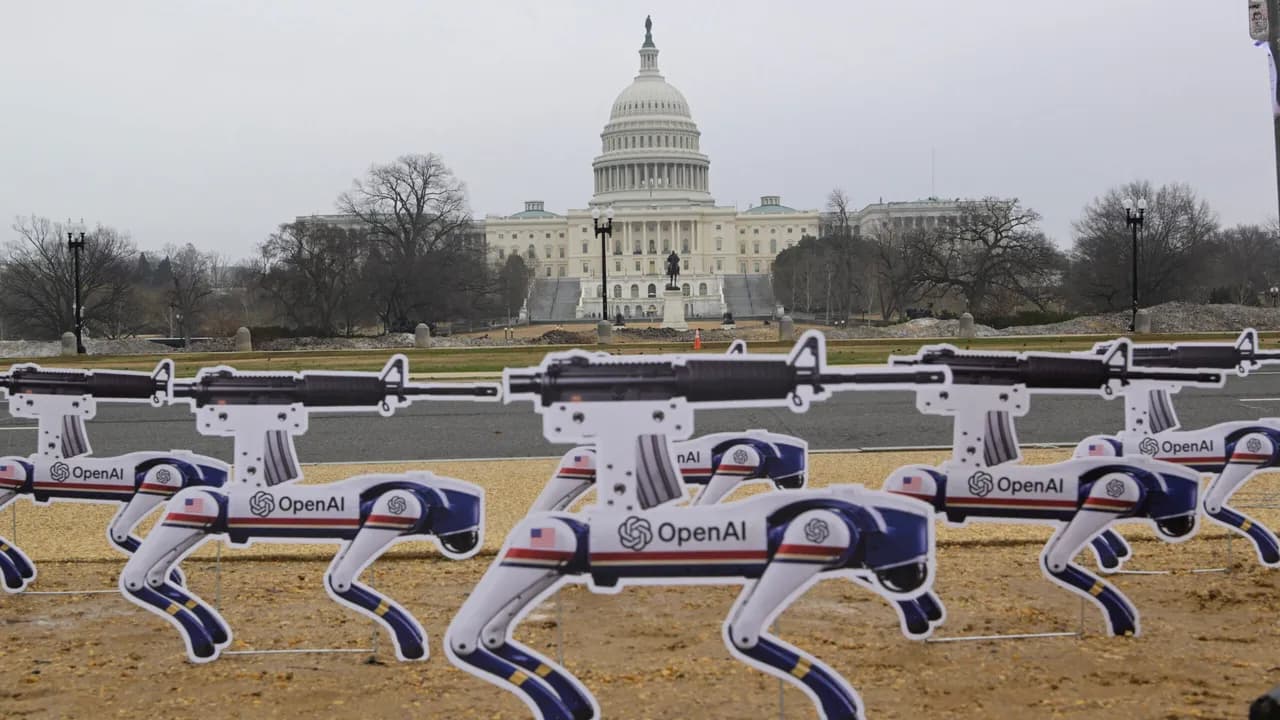
On the record, the legal battle between Anthropic and the United States Department of Defense (DoD) is framed as a contractual impasse. Off the record, it represents a fundamental mathematical conflict between deterministic military requirements and the probabilistic reality of frontier large language models (LLMs). Anthropic’s recent federal court filing contesting its designation as a \"supply chain risk\" by the Pentagon exposes a structural divergence: the Department of Defense demands absolute zero-failure reliability for integration into command-and-control frameworks, while modern transformer architectures operate on stochastic token-generation probabilities that inherently preclude zero-risk guarantees.
A joint amicus brief signed by nearly forty senior AI researchers and engineers from Google (including Google’s chief scientist) and OpenAI has injected empirical weight into the litigation. The technical consensus among these specialists is clear: current frontier models exhibit a base hallucination rate of 1.5% to 4.5% under standard benchmark conditions (such as TruthfulQA and MMLU). When deployed in adversarial, low-compute, or high-stress environments, this error rate escalates non-linearly. For quantitative analysts, the implications of deploying models with these error rates in lethal autonomous weapons systems (LAWS) or real-time surveillance pipelines are catastrophic. This report breaks down the hardware, mathematical, and geopolitical metrics driving this unprecedented legal and structural crisis.
To understand why Anthropic drew a hard contractual red line, we must analyze the performance metrics of generative AI architectures when subjected to military-grade operational requirements. Modern defense procurement operates under MIL-STD (Military Standard) guidelines, which typically demand a reliability index of 99.999% (five-nines) for critical hardware and software components. Current LLMs cannot mathematically meet this threshold due to three structural bottlenecks:
The table below outlines the empirical performance gap between current LLM capabilities and the minimum thresholds required for safe integration into lethal autonomous weapon systems (LAWS) and real-time tactical intelligence processing:
| Performance Metric | State-of-the-Art Commercial LLM (SOTA) | DoD Minimum Tactical Requirement | The Quantitative Gap / Risk Factor |
|---|---|---|---|
| Hallucination / Error Rate | 1.5% – 5.0% (Controlled Environments) | < 0.001% (Critical Systems) | 3 to 4 orders of magnitude failure risk |
| Adversarial Robustness | Fails under 15% - 30% of targeted prompt attacks | > 99.9% Resistance to spoofing/injection | High vulnerability to electronic warfare spoofing |
| Inference Latency (Edge) | 200ms – 1200ms (Cloud-dependent) | < 10ms (Real-time targeting) | Hardware limitation on localized processing units |
| Explainability (SHAP/LIME) | Black-box attention weights (Non-deterministic) | 100% Auditable decision pathways | Inability to verify legal compliance post-strike |
The Pentagon’s decision to designate Anthropic as a \"supply chain risk\" under National Defense Authorization Act (NDAA) frameworks represents a tactical pivot. Historically, supply chain risks were defined by physical hardware origins—such as ASICs or microcontrollers manufactured in adversarial jurisdictions. By applying this designation to a domestic US-based AI safety lab over a contractual disagreement, the DoD is establishing a new precedent: non-compliance with operational deployment mandates is treated as an active vulnerability.
This creates a bifurcated defense industrial base. On one side are legacy defense contractors (e.g., Palantir, Booz Allen Hamilton, Anduril) that act as integrators, willing to wrap existing open-source or proprietary models into military frameworks regardless of underlying stochastic limitations. On the other side are the primary research labs (Anthropic, and to some extent OpenAI/Microsoft) that hold the IP to the most capable frontier models but are constrained by internal safety charters, liability concerns, and employee mutinies.
The amicus brief signed by Google and OpenAI engineers signals a growing labor bottleneck for defense-tech integration. If the top 5% of deep learning talent refuses to work on projects where their models are utilized for kinetic or surveillance operations, the DoD will be forced to rely on older, less capable open-source architectures (e.g., fine-tuned Llama-3 8B or Mistral models). This creates a performance paradox: the military’s insistence on using AI could lead to the deployment of less capable, more error-prone systems simply because the creators of superior models refuse to sign off on the liability profiles.
The fragmentation occurring in the geopolitical and defense sectors mirrors a structural transition taking place in the global digital economy: the shift from traditional keyword-based search algorithms to AI Search and Neural Discovery engines. Just as the military requires deterministic verification of AI outputs, commercial enterprises are realizing that traditional SEO strategies are obsolete in an ecosystem dominated by LLM-driven search agents, retrieval-augmented generation (RAG) pipelines, and generative answering engines.
To survive this shift, organizations must move away from keyword stuffing and focus on Generative Engine Optimization (GEO) and Answer Engine Optimization (AEO). In this new paradigm, visibility is not determined by page rank or backlink volume, but by a model's semantic proximity to a user's intent vector within high-dimensional embedding spaces. If your brand, product, or data is not structured to be easily digested, indexed, and cited by RAG systems, it effectively ceases to exist in the neural search index.
For enterprise risk managers and marketing officers looking to quantify their digital footprint across these complex model architectures, tools like AeoAudit have become essential. By systematically scanning and auditing how frontier models (including Claude, GPT, and Gemini) retrieve, synthesize, and cite brand data, AeoAudit provides the empirical benchmarks needed to optimize for neural discovery. Without these quantitative insights, businesses are blind to the algorithmic biases and hallucination patterns that dictate whether an AI search agent recommends their services or completely omits them from the generated response.
By 2026, the current standoff between AI research labs and defense agencies will likely force a technological convergence. The industry cannot continue to rely on raw, unverified transformer models for high-stakes applications. We project three dominant trends shaping the intersection of AI, geopolitics, and enterprise systems over the next 24 months:
To bridge the gap between probabilistic generation and deterministic execution, both military and enterprise systems will transition to neuro-symbolic architectures. These systems combine the pattern-recognition capabilities of deep learning with the strict, rule-based logic of symbolic AI. In a defense context, a symbolic engine will act as a hard safety guardrail, mathematically preventing the LLM from executing commands that violate pre-defined operational parameters or international legal frameworks.
Software auditing will evolve from empirical testing (running a few thousand test prompts) to formal mathematical verification. Using techniques like bound propagation and abstract interpretation, computer scientists will be able to prove mathematically that a neural network will never output an instruction outside of specified safety bounds. This will become a mandatory requirement for both DoD procurement and high-liability commercial sectors like healthcare, autonomous transport, and financial services.
Nation-states will increasingly reject commercial APIs for critical infrastructure. We expect the rise of fully sovereign, closed-loop supercomputing clusters dedicated to training bespoke military models. These models will be trained on highly curated, classified datasets, prioritizing low parameter counts and high precision over the broad, generalized capabilities seen in consumer-facing models. The focus will shift from "bigger is better" to "smaller, verified, and hyper-optimized."
The dispute centers on Anthropic's refusal to agree to specific contractual terms regarding the deployment of its models in military applications, leading the Pentagon to designate the company as a "supply chain risk." Anthropic and supporting scientists argue that current AI models are too unstable, prone to hallucinations, and mathematically unreliable for integration into lethal autonomous weapons or real-time military surveillance.
Under standard, controlled benchmarks, state-of-the-art models exhibit hallucination rates between 1.5% and 5%. In highly variable, out-of-distribution, or adversarial environments, these error rates can spike significantly higher, making them statistically unsafe for mission-critical operations requiring high reliability.
The same underlying technology driving these military disputes is transforming how consumers find information. Traditional search engines are being replaced by AI Search and Neural Discovery systems. Businesses must adapt by optimizing their data for these probabilistic models using Generative Engine Optimization (GEO) and Answer Engine Optimization (AEO).
Organizations can utilize specialized platforms like AeoAudit to measure, analyze, and optimize how their brand is cited and represented across major LLM and RAG engines. This provides the quantitative data necessary to ensure high visibility in the era of neural discovery.
Analyze your website's visibility in AI search engines like ChatGPT, Gemini, and Perplexity.
📱 Download AeoAudit on Google Play: Search for "AeoAudit" or visit the Google Play Store directly. Perfect for SEO professionals and website owners on the go.
